India Brings Back Kerosene Amid Lpg Shortage Triggered by West Asia Conflict

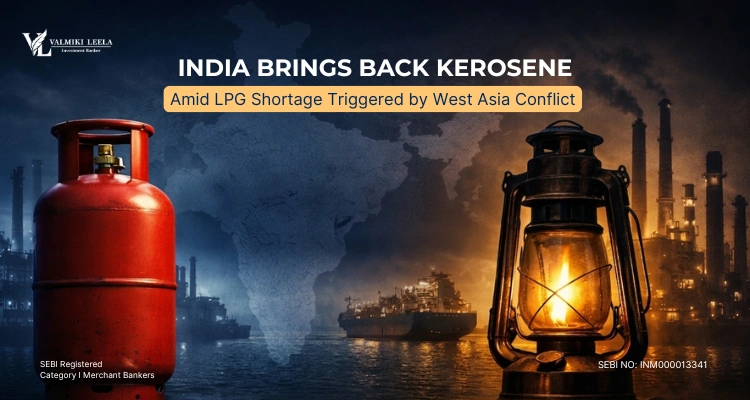
The Indian government has taken emergency steps to address growing concern over LPG shortages, temporarily reintroducing kerosene as a cooking fuel in households after years of phasing it out in favor of cleaner alternatives.
The Trigger: Geopolitical Tensions in West Asia
The current crisis is linked to the ongoing conflict between Iran and Israel, often described as the West Asia or Middle East crisis. The conflict has disrupted shipping through the Strait of Hormuz, a narrow but vital route for global energy supplies. India depends heavily on LPG imports from the Gulf region, with about 85 to 90% passing through this route. With shipping traffic nearly halted, LPG supplies have become significantly tighter.
India, the world’s second-largest LPG importer, consumed around 31–33 million tonnes in recent fiscal years, with domestic production meeting only a fraction of demand. The shortfall has led to panic bookings, longer wait times for refills, and restrictions on commercial use to prioritize households.
Government Response: Kerosene Allocation and Alternatives
To ease pressure on LPG supplies, the Centre has announced an additional allocation of 48,000 kilolitres of kerosene to states and Union Territories. This is over the regular monthly quota of about 1 lakh kilolitres.
Kerosene will be distributed mainly through the Public Distribution System via ration shops. It is intended for households, especially in rural areas, for cooking and, in some cases, for lighting.
Distribution details:
- States and Union Territories will decide who receives kerosene and in what quantity. Priority will be given to rural and low-income households.
- Coastal states have requested higher quotas as fishing communities depend on kerosene.
- States must lift their allocation within 45 days, and any unused quantity will not be carried forward.
Safeguards:
- Strict measures are in place to prevent kerosene from being diverted for mixing with petrol or diesel.
Other measures:
- Commercial LPG use has been restricted in some cases to about 20% of average monthly consumption. This is pushing hotels, restaurants, and eateries to use alternatives such as coal, biomass, or firewood.
- Domestic LPG production has reportedly increased by about 25%, and new shipments are arriving, but supply conditions remain tight.
A representative from the All-India Fair Price Shop Dealers’ Association, Biswambhar Basu, said the network is ready to support distribution. The aim is to provide relief to poor and rural households. In many areas, distribution is expected to be around half a litre per person per month.
Why Kerosene? A Look Back at Its Phasing Out
For more than a decade, India promoted LPG as a cleaner and more efficient cooking fuel through schemes such as the Pradhan Mantri Ujjwala Yojana. This helped achieve near-universal household coverage and reduced indoor air pollution caused by traditional fuels. Kerosene use for cooking was gradually phased out, and subsidies were redirected toward LPG cylinders.
Kerosene’s temporary return during a crisis is practical for a few reasons:
- It can be produced quickly and in large volumes during crude oil refining.
- No major infrastructure changes are required. Many households still have kerosene stoves or can easily access low-cost ones.
- The wide network of the Public Distribution System, with nearly five lakh ration shops, allows fast last-mile delivery.
This move is considered a short-term solution during an emergency, not a reversal of India’s long-term push toward cleaner cooking fuels.
Impact on Households and the Broader Picture
For millions of households, especially in rural and low-income areas, this acts as an important backup and helps prevent cooking disruptions. At the same time, it highlights India’s vulnerability to global energy shocks. Events happening far away can quickly affect everyday kitchen routines.
Some households may bring back old stoves or buy new kerosene stoves, while a few commercial kitchens may revert to traditional methods. The situation also underscores the need for diversified energy sources, higher domestic production, and alternatives like piped natural gas (PNG) in cities.
As the situation develops, the government is asking people to stay calm and avoid panic hoarding while working to secure alternative supplies. Kerosene can provide immediate relief, but the long-term focus remains on expanding cleaner and more reliable cooking fuels for Indian homes.
This temporary reintroduction of kerosene is a practical response to an unexpected LPG shortage caused by geopolitical tensions. It ensures households, particularly in rural and low-income areas, can continue cooking without disruption. While it highlights India’s dependence on imported energy, the long-term commitment to cleaner fuels remains unchanged.