Plastic Isn’t Going Away, It’s Getting Smarter: Inside the $286 Billion Rigid Packaging Revolution

Packaging rarely captures the spotlight, yet it plays an essential role in nearly every product we buy. From the shampoo bottle on your bathroom shelf to the medicine strip in your cabinet, rigid packaging quietly delivers critical functions: protecting, preserving, and presenting goods effectively.
As global consumption patterns evolve and sustainability demands intensify, the rigid packaging industry is undergoing significant transformation. Understanding these changes is valuable for investors, business leaders, and anyone in the materials that shape our daily lives.
The Big Picture: A Market on a Steady Climb
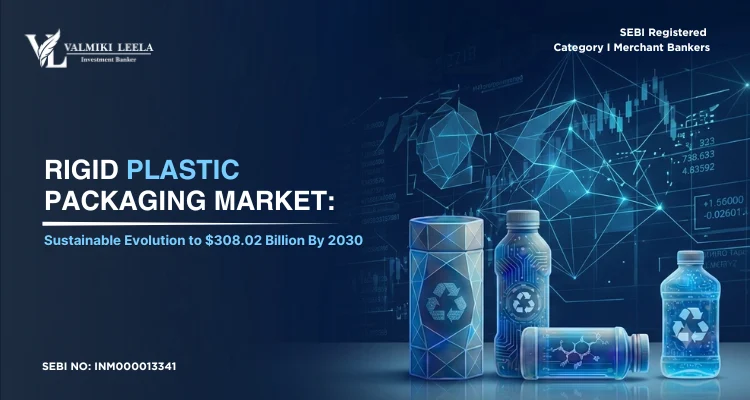
The global rigid plastic packaging market is estimated at USD 255.24 billion in CY25 and is projected to reach USD 286.34 billion by CY30. This represents a compound annual growth rate (CAGR) of approximately 2.41% over the CY20-CY30 period. While not explosive, this steady growth reflects a mature industry that is adapting and evolving rather than declining.
Within the broader rigid packaging sector, plastic continues to lead by value, followed by paper and paperboard, metal, and glass. Each material serves a distinct purpose and is being reshaped by its own unique challenges and innovations.
Rigid Plastic Packaging: Trends and Outlook
Rigid plastic packaging, primarily bottles, jars and tubs, continues to dominate across beverages, food, personal care, and pharmaceutical sectors. Made mainly from Polyethylene Terephthalate (PET), High-Density Polyethylene (HDPE), and Polypropylene (PP), these materials remain popular due to their lightweighting properties. Monomaterial designs are also advancing, as they significantly simplify recycling.
PET holds the largest share of the rigid plastic market. It was valued at approximately USD 63.76 billion in CY20 and is projected to reach USD 78.65 billion by CY30. Other resins, including PE, PP, PS, PVC, and bioplastics, are expected to register a more modest growth of 2-3% CAGR between CY25 and CY30.
Bioplastics, though still a small segment, are gaining momentum in compostable and lower-carbon applications, particularly in premium and regulated markets. Their broader adoption is currently limited by challenges of scale and supporting infrastructure.
This balanced evolution reflects the industry’s focus on responsible innovation while maintaining performance and affordability.
Who is buying all this plastic?
The food and beverages sector remains the largest end user of rigid plastic packaging. This segment was valued at approximately USD 135.19 billion in CY20 and is projected to reach USD 167.73 billion by CY30. Bottles, jars, tube, and trays used for packaged food and beverages account for the majority of this demand.
Pharmaceuticals and healthcare follow as the next major segment, driven by the need for sterile, tamper-evident, and traceable packaging such as vials and specialized containers. Personal care and cosmetics also represent a significant share, with a strong preference for premium finishes, pumps, and refillable systems that enhance user experience. Industrial applications, including chemicals and lubricants, provide a more stable yet cyclical source of demand.
Across all categories, a clear trend toward circularity is emerging. Recycled PET, recycled HDPE, and mono-material PP are increasingly becoming the preferred and often mandatory choices.
A Regional Story: Asia-Pacific Leads, the West Refines
Asia-Pacific remains the clear global leader in both production and consumption of rigid plastic packaging, with its dominance continuing to strengthen.
- Production in the region is projected to grow from approximately 47.71 million metric tonnes in CY25 to 55.44 million metric tonnes by CY30, reflecting a CAGR of about 3.05%.
- Consumption is expected to rise from 41.98 million metric tonnes to 48.72 million metric tonnes over the same period, at a CAGR of roughly 3.02%.
This robust growth is driven by expanding consumer markets, increasing e-commerce activity, and strong manufacturing capabilities.
In contrast, North America and Europe are mature markets. While they continue to see steady growth in production and consumption, their primary focus is on sustainability, circular economy practices, and regulatory compliance rather than volume expansion.
Latin America and the Middle East & Africa represent smaller markets but are experiencing consistent gradual growth. Rising urbanization and increasing household incomes are boosting demand for packaged goods in both regions.
Packaging Beyond Plastics: Key Materials and Their Roles
While plastic dominates sustainability discussions, other materials play key roles in modern packaging. Each offers unique strengths and trade-offs in performance, environmental impact, and circularity.
Glass: Glass is often used for premium products like alcohol, cosmetics, and medicines because it doesn't react with what’s inside and keeps the product safe. It can also be recycled again and again without losing quality. Making glass takes a lot of energy since it requires high temperatures, but using recycled glass helps cut down energy use and emissions. It is heavier to transport, which adds to its environmental impact, but its strong recyclability still makes it’s a valuable choice.
Flexible Packaging: Flexible packaging like films, laminates, and pouches is widely used for snacks, dairy, confectionery, and personal care products. It is lightweight and offers strong protection, helping reduce food waste and environmental impact. Since most of it is made from petroleum-based materials, the industry is moving toward fully recyclable mono-materials like PE or PP and increasing the use of recycled content.
Aluminium: Aluminium foil and trays deliver vital protection for pharmaceuticals, dairy, and ready-to-eat meals against light, oxygen, and moisture. Primary production is highly energy-intensive, but recycling uses up to 95% less energy. Efficient collection and clean separation from plastic or paper laminates are essential to maximize its circular value.
Paper and Paperboard: Paper-based materials are growing due to their renewable, biodegradable nature and lower carbon footprint when responsibly sourced. They are increasingly used in flexible packaging but often need polymer or aluminium layers for barriers, which can limit recyclability. Ongoing research aims to enhance paper’s natural barriers while preserving recyclability and compostability.
The Road Ahead:
The data reveals an evolution in packaging rather than a disruption. Plastic is being redesigned, not replaced. Recycled content, monomaterial structures, and circular systems are becoming the new normal. Glass, metal, and paper retain strong positions in premium and sustainability-focused categories, while flexible packaging continues to grow alongside rigid packaging.
For businesses, growth will favor those who combine performance with recyclability and adapt to regional dynamics, whether scaling in Asia Pacific or meeting stricter regulations in North America and Europe. Though not always in the headlines, the rigid packaging industry’s quiet transformation is shaping how products reach consumers for years to come.